 News
News
RESCALE Featured in HiPEACinfo #77
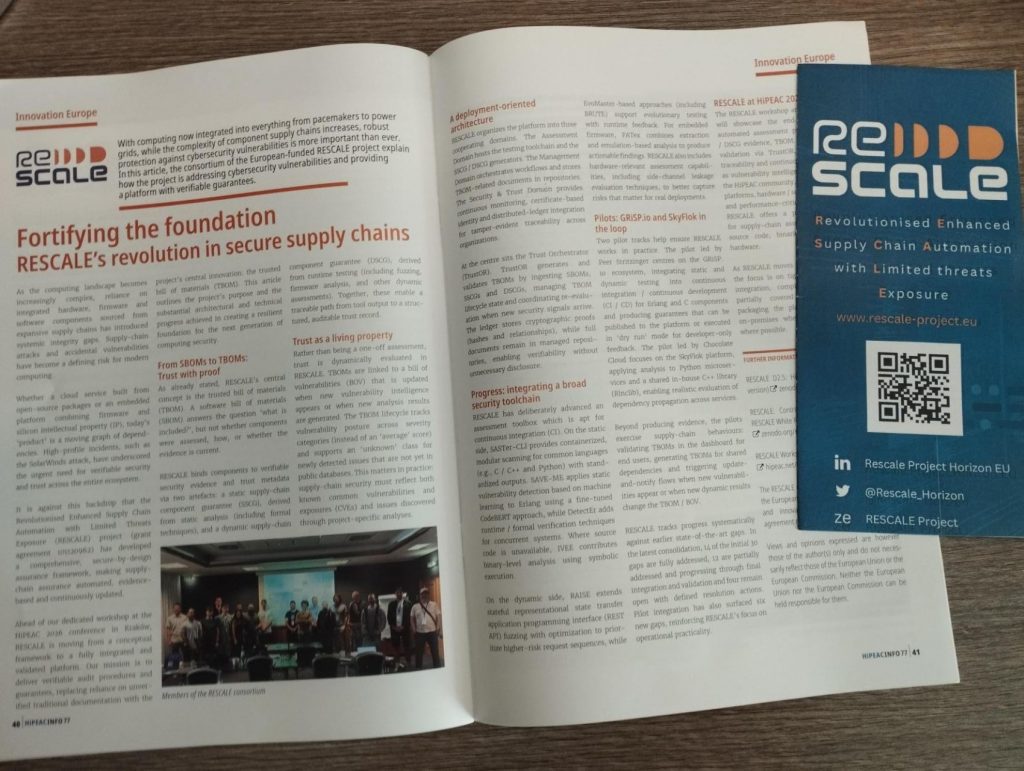
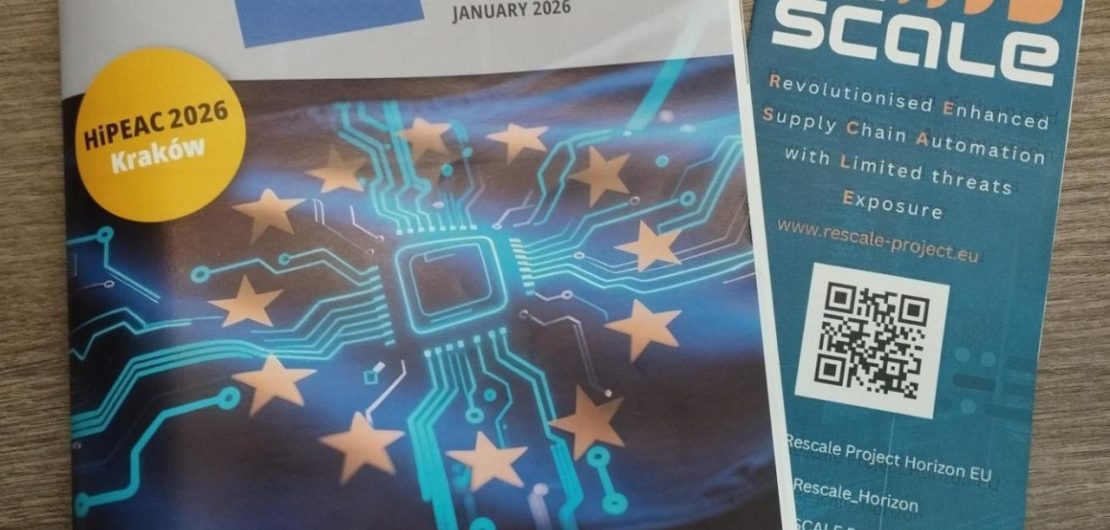
We’re happy to share that RESCALE is featured in HiPEACinfo #77, the HiPEAC network’s magazine showcasing important developments and perspectives from Europe’s computing-systems ecosystem.
HiPEACinfo is widely read across research and industry communities working on computer architecture, systems and trustworthy computing, making it a great channel to communicate RESCALE’s vision and impact beyond the immediate project circle.
Where to read HiPEACinfo #77
HiPEAC has made the full issue available for download via the HiPEACinfo #77 landing page and direct PDF download. Printed copies were also distributed during HiPEAC 2026.
The RESCALE feature article
RESCALE appears in the Innovation Europe section with the article “Fortifying the foundation: RESCALE’s revolution in secure supply chains” (RESCALE project consortium). The article outlines why supply-chain integrity has become such a defining challenge for modern computing, and how RESCALE is building a practical response grounded in evidence, automation, and cross-layer visibility.
Key ideas covered: from “what is included?” to “trust with proof”
A major theme in the article is the evolution from traditional Bills of Materials to trusted, evidence-backed records of a system’s composition and security posture. RESCALE introduces the Trusted Bill of Materials (TBOM) as a way to go beyond inventory alone and support security-relevant context (what was assessed, how it was assessed, and what evidence exists), traceability across dependencies and components, and a more auditable trust story suitable for dynamic, continuously updated systems. This reflects a crucial reality: security and trust are not static; they need to be continuously revisited as systems change and as new vulnerability intelligence becomes available.
Building supply-chain assurance that can scale
The feature also highlights RESCALE’s broader direction: enabling automated, secure-by-design assurance across the hardware/software stack, including lifecycle stages where vulnerabilities can enter or propagate. The aim is not only to detect issues, but to make assurance repeatable, evidence-based, and operationally practical for real development and delivery pipelines.
Pilots and practical validation
The article describes how pilots are used to keep RESCALE grounded in real workflows and realistic supply-chain behavior, including how evidence can be produced and linked to specific components, how dependency changes and updates can trigger re-evaluation and notification flows, and how trust information can remain useful to downstream users over time. This emphasis on “works in practice” is central to RESCALE’s approach, and it is also why sharing the story in HiPEACinfo matters: it invites the broader community to reflect, challenge assumptions, and help shape adoption paths.
Many thanks to HiPEAC for including RESCALE in this issue, and to all consortium contributors who helped shape the article.