News

2nd RESCALE Info Day | Helsinki 2026

The RESCALE project is pleased to invite stakeholders to the RESCALE Stakeholder Info Day 2026, bringing together industry, academia, public authorities, and cybersecurity experts to discuss the future of secure and resilient software and hardware supply chains.

The event will present project results, demonstrate RESCALE tools, and foster discussion on current challenges in supply chain security, including emerging requirements under the EU Cyber Resilience Act (CRA) and their impact on end-to-end digital product assurance.

Event Details (Hybrid Participation)

📍 Date: Tuesday 13 May 2026
🕗 Time: 08:00 – 12:00 (EEST / Helsinki time)
📍 Venue: Scandic Park Helsinki, Mannerheimintie 46, Helsinki, Finland
💻 Format: Hybrid (on-site and online participation available)

On-site Participation Benefits

  • 🍽️ Morning Breakfast with Snacks (08:00 – 08:30)
  • 🍽️ Hotel Buffet Networking Lunch (12:30 – 13:15)
  • 🤝 Networking opportunities with speakers and stakeholders

The in-person event in Helsinki will include presentations, live demonstrations, and networking opportunities over a light breakfast and lunch. Due to limited capacity, on-site participation will be offered to a selected number of stakeholders. 

Online participation will also be available for remote attendees. A Microsoft Teams link will be shared with registered participants prior to the event.

Call for Presentation Topic Proposals

Organisations are invited to submit presentation topic proposals (non-sales / non-commercial content only) for 10-minute speaking slots.

Suggested topics include:

  • Cyber Resilience Act (CRA) implications and implementation
  • Software & hardware supply chain security
  • Security toolsets, methodologies, and frameworks
  • Digital product assurance and compliance
  • Real-world case studies and lessons learned

Selected speakers will be contacted during agenda finalisation.

Registration

Participation is free of charge, but registration is required. 

Registration closes on Friday 8 May 2026 at 15:00 (Finnish time).

⚠️ On-site participation is limited and offered on a first-come, first-served basis.

Registration is binding. If you are unable to attend, cancellation must be communicated as soon as possible via email so that your place can be offered to the next participant on the waiting list.

👉 Helsinki On-site physical attendees can register here: https://forms.gle/S6xhJoi3yW4fKexW6

👉 Online, Europe-wide attendees can register here: https://forms.gle/XQE1Wx4q7oB8RFcP8

Official event agenda will be announced shortly.

We look forward to welcoming you to the event!
News

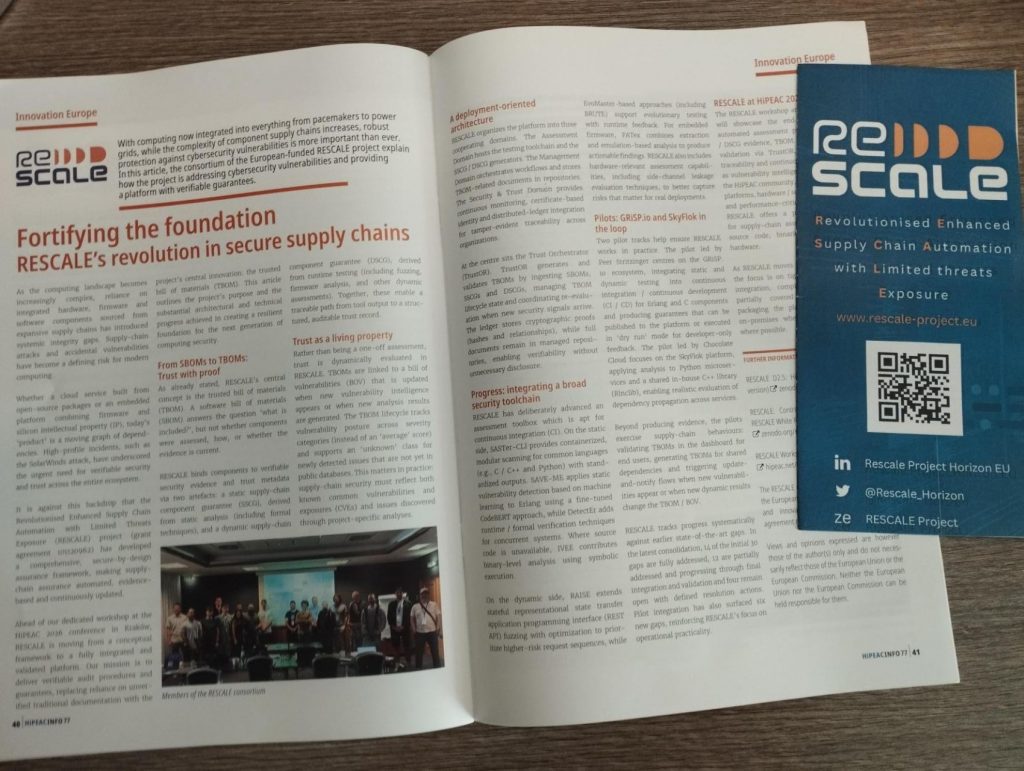
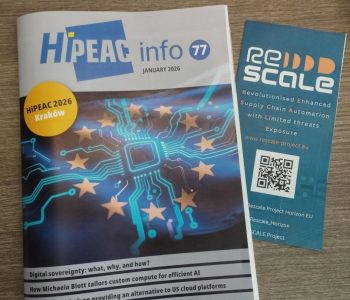
RESCALE Featured in HiPEACinfo #77

We’re happy to share that RESCALE is featured in HiPEACinfo #77, the HiPEAC network’s magazine showcasing important developments and perspectives from Europe’s computing-systems ecosystem.

HiPEACinfo is widely read across research and industry communities working on computer architecture, systems and trustworthy computing, making it a great channel to communicate RESCALE’s vision and impact beyond the immediate project circle.

Where to read HiPEACinfo #77

HiPEAC has made the full issue available for download via the HiPEACinfo #77 landing page and direct PDF download. Printed copies were also distributed during HiPEAC 2026.

The RESCALE feature article

RESCALE appears in the Innovation Europe section with the article “Fortifying the foundation: RESCALE’s revolution in secure supply chains” (RESCALE project consortium). The article outlines why supply-chain integrity has become such a defining challenge for modern computing, and how RESCALE is building a practical response grounded in evidence, automation, and cross-layer visibility.

Key ideas covered: from “what is included?” to “trust with proof”

A major theme in the article is the evolution from traditional Bills of Materials to trusted, evidence-backed records of a system’s composition and security posture. RESCALE introduces the Trusted Bill of Materials (TBOM) as a way to go beyond inventory alone and support security-relevant context (what was assessed, how it was assessed, and what evidence exists), traceability across dependencies and components, and a more auditable trust story suitable for dynamic, continuously updated systems. This reflects a crucial reality: security and trust are not static; they need to be continuously revisited as systems change and as new vulnerability intelligence becomes available.

Building supply-chain assurance that can scale

The feature also highlights RESCALE’s broader direction: enabling automated, secure-by-design assurance across the hardware/software stack, including lifecycle stages where vulnerabilities can enter or propagate. The aim is not only to detect issues, but to make assurance repeatable, evidence-based, and operationally practical for real development and delivery pipelines.

Pilots and practical validation

The article describes how pilots are used to keep RESCALE grounded in real workflows and realistic supply-chain behavior, including how evidence can be produced and linked to specific components, how dependency changes and updates can trigger re-evaluation and notification flows, and how trust information can remain useful to downstream users over time. This emphasis on “works in practice” is central to RESCALE’s approach, and it is also why sharing the story in HiPEACinfo matters: it invites the broader community to reflect, challenge assumptions, and help shape adoption paths.

Many thanks to HiPEAC for including RESCALE in this issue, and to all consortium contributors who helped shape the article.

News

RESCALE at HiPEAC 2026: Posters, Knowledge Exchange, and a…

RESCALE was proud to take part in HiPEAC 2026 in Kraków, Poland, engaging with one of Europe’s most important communities for computing systems research and innovation. Across the conference, our team connected with researchers, practitioners and industry stakeholders working at the intersection of hardware and software systems, performance, AI, and cybersecurity.

Our participation combined two key activities: on-site project posters to share RESCALE’s vision, objectives and progress, and a full-day RESCALE workshop dedicated to discussion and exchange around supply-chain assurance and “trust with proof”.

Thank you to everyone who stopped by, asked questions, shared insights, and helped make RESCALE’s presence at HiPEAC 2026 so valuable.

RESCALE posters on site: bringing the project to the community

Throughout HiPEAC 2026, RESCALE posters were available on Level 1, offering attendees an at-a-glance introduction to the project’s overall mission and the supply-chain challenge it addresses, why traditional “trust” signals in software and hardware supply chains are no longer enough and RESCALE’s vision for scalable, evidence-based assurance across the lifecycle.

Poster sessions are often where the most direct conversations happen and we were delighted to meet people with diverse perspectives, including those focused on embedded systems, cloud services, development toolchains and certification pathways. 

A successful full-day RESCALE workshop at HiPEAC 2026

A highlight of the conference was the dedicated RESCALE workshop, which took place on the last day of the conference and brought together participants from across the community to exchange practical experiences of supply-chain risk in modern systems, technical ideas for improving assurance and traceability and views on how to make “secure-by-design” measurable, maintainable and adoptable. The session created space for open, constructive discussion. Precisely the kind of community engagement RESCALE aims to foster.

Why supply-chain assurance needs a cross-layer view

Today’s computing systems are assembled from a complex mix of source code and third-party dependencies, binaries, firmware, and configuration artifacts, hardware components and platform features, and continuous updates and vulnerability intelligence that evolve over time. This reality makes “supply-chain security” more than a single check or document. It requires a holistic, cross-layer approach that can scale with the system. RESCALE is built around this principle, bringing together secure-by-design methods and tooling across the chain.

What RESCALE brings to the table: from SBOM to TBOM

One of the workshop’s core themes was RESCALE’s Trusted Bill of Materials (TBOM). While a classic SBOM helps answer “what is included?”, the TBOM goes further by supporting visibility across software and hardware components, traceability for where components come from and how they evolve, and verifiable security assurances backed by evidence rather than static claims. This idea reflects a wider shift in cybersecurity: trust is increasingly something that must be demonstrated and maintained, not assumed.

Connecting with HiPEAC’s community priorities

HiPEAC brings together people who build and study systems that are often performance-critical, safety- and security-relevant, highly heterogeneous (hardware/software co-design, accelerators, edge-to-cloud setups), and dependent on large stacks of third-party components. These environments make supply-chain assurance especially challenging—and especially important. For RESCALE, HiPEAC 2026 was an excellent place to test assumptions, compare approaches, and invite feedback on how supply-chain “trust records” can work in practice.

If you missed the workshop, or want to explore the project’s motivations and direction in more depth, here you can find the RESCALE feature in HiPEACinfo #77.  

What’s next for RESCALE

RESCALE continues to advance its platform and methods to support automated, evidence-based supply-chain assurance, with a focus on real-world adoption and integration. We will keep sharing updates, results, and opportunities to engage through our website channels.


News

RESCALE 5th Plenary Meeting

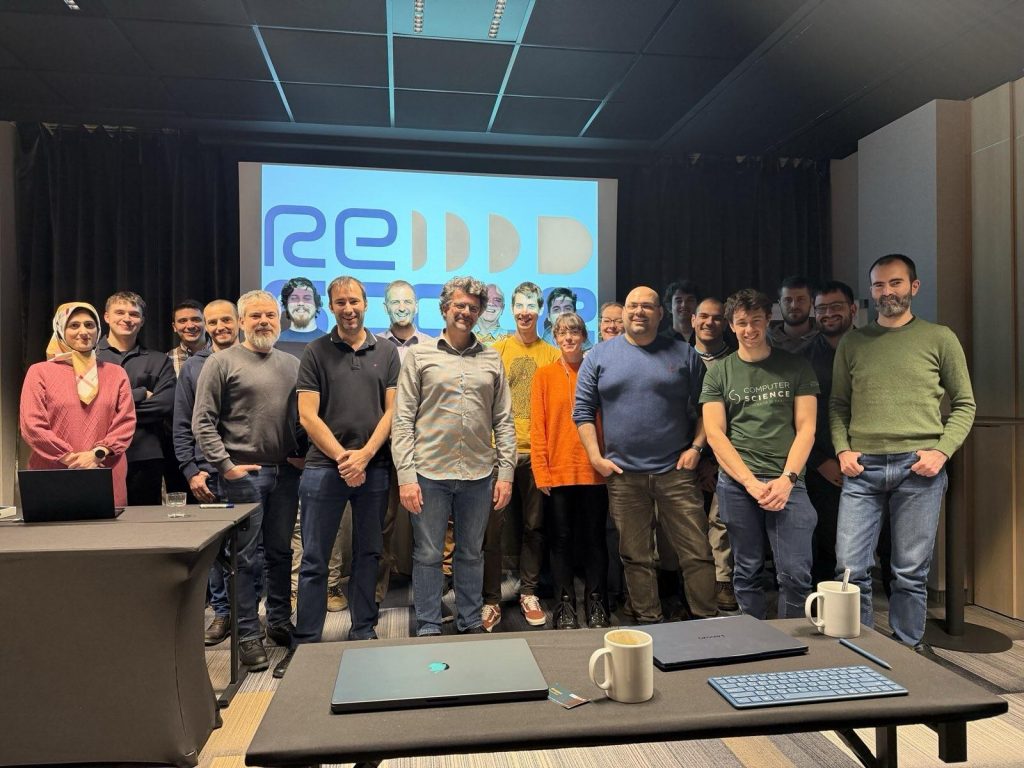
The 5th RESCALE Plenary Meeting took place in Kraków, Poland, on 29–30 January 2026. Hosted by SPHYNX TECHNOLOGY SOLUTIONS AG, the meeting brought together project partners to review progress, align on key objectives, and plan the final months of the project.

Over the course of two days, participants shared task-by-task updates, discussed deliverable status, assessed risks and dependencies, and coordinated inter-WP activities to ensure smooth project completion. Key decisions were made, setting the direction for the remaining project milestones.

We extend our sincere thanks to SPHYNX TECHNOLOGY SOLUTIONS AG for their excellent organization and warm hospitality, which contributed greatly to the meeting’s success.

Stay tuned for further updates as RESCALE continues to advance its mission to revolutionize supply chain automation with enhanced security and limited threat exposure, including upcoming webinars and info days on supply chain security.

News

RESCALE Project at HiPEAC 2026: Workshop on Supply Chain…

The RESCALE project will be hosting an exciting workshop at HiPEAC 2026 in Krakow, showcasing cutting-edge advancements in supply chain security. The event is scheduled for Wednesday, January 28, 2026, and will feature a series of insightful presentations and discussions from key experts in the field.

Workshop Highlights:

  • Project Presentation by Apostolos Fournaris, RESCALE Project Coordinator, setting the stage for the day’s activities.

  • In-depth Sessions on the RESCALE tools and submodules, presented by Panagiotis Antoniou, Network Software Engineer at AEGIS IT RESEARCH.

  • Live Demo of the RESCALE solution by Dani Asztalos, Software Engineer at Chocolate Cloud ApS.

  • A diverse range of European projects focusing on innovative frameworks and tools for cybersecurity and AI integration will also be presented, including::

    • CoEvolution: A comprehensive framework for connected machine learning and secure AI solutions.

    • CyberSecDome: Enhancing critical infrastructure resilience with AI and VR.

    • SYNAPSE: A platform for cyber risk and resilience management, improving situational awareness and incident preparedness.

    • CASTOR: Strengthening trust and agility in digital systems.

The workshop will conclude with a Panel Discussion titled “From Source to Service: Strengthening Supply Chain Security”, leaving time at the end for networking, questions and further discussions.

This workshop is part of the ongoing efforts of the RESCALE project, which is funded by the European Union’s Horizon Europe research and innovation programme. The RESCALE initiative aims to provide advanced solutions for securing digital ecosystems through innovative AI-powered frameworks.

Download the full workshop agenda here.

We look forward to seeing you at the event!

Blog Post

The Anatomy of an Update: How RESCALE Built a…

When you are building something as critical as a secure-by-design supply chain solution, you cannot just stick to the initial draft. The project is evolving!

That is the philosophy behind RESCALE. Our mission is to revolutionize security in both hardware and software supply chains, anchored by our flagship development: the Trusted Bill of Materials (TBOM). But a great tool is useless without a great plan.

We started with a foundational set of Use Case specifications, but as our two pilots (CC and PST) got to work and new insights emerged, it was clear we needed an important update. This is not just paperwork; it is a living, breathing blueprint for a more secure world.

Here is the five-step, collaborative, and iterative methodology we followed to build the updated Use Case specifications that are robust and battle-tested:

  1. Talking to the People Who Matter (Pilot Engagement)

Before we drew a single line on the updated specs, we went straight to the source: our pilot teams and their technical staff.

This was not a one-and-done survey. We established continuous feedback loops -from online meetings to ad-hoc team chats- to ensure we were not working in a vacuum. We translated their real-world insights into practical challenges, expectations, and technological constraints. If a specification does not accurately reflect their business needs, it is not a solution! This continuous, open dialogue was essential to making sure our plan was grounded.

  1. The Collaborative Summit (Specifications Workshop)

We believe the best ideas happen when people are in the same room. So, we brought all key pilot stakeholders together to our Amsterdam Plenary meeting for a dedicated, in-person workshop.

Think of it as a deep-dive summit. The objective was to reassess and refine the initial Use Cases. Participants analyzed existing specifications, debated their relevance, and collaboratively incorporated refinements. This session fostered a shared understanding, allowing us to identify crucial new specifications while refining existing ones to perfectly address the pilots’ specific operational needs.

  1. Learning from the Test Drive (Platform Evaluation)

Why wait until the end to find out if your plan works? We put the first release of the RESCALE Platform into the pilots’ hands early on.

The observations gathered from this real-world testing were priceless. They helped us identify operational friction points and alignment gaps. Essentially, the test drive helped us iron out the wrinkles in our existing specifications, ensuring the updated version was perfectly aligned with how the platform operates. This step was also key in formulating the updated usage scenarios we will use to validate the final release.

  1. Getting Smart with MoSCoW Prioritization

Once we had a long list of refined ideas and new requirements, we needed to focus on our resources where they mattered most. Enter the MoSCoW Prioritization Technique.

This structured framework allowed our pilot stakeholders to collaboratively categorize every requirement, which helped eliminate ambiguity and ensure we directed our energy toward the highest-impact functionalities:

  • Must have: The absolute, non-negotiable features essential for pilot success.
  • Should have: Important features that significantly enhance functionality but are not critical for the initial go-live.
  • Could have: Desirable features that add value if time and resources permit.
  • Won’t have: Features out of scope.
  1. The Blueprint is Complete (Finalizing the Specs)

The final step was the consolidation phase. We merged the insights from continuous stakeholder engagement, the structured refinements from the workshop, and the real-world feedback from the platform evaluation.

This iterative, cooperative process resulted in a final, robust set of Updated Use Case Specifications and the Usage Scenarios needed to validate the final release. This refined blueprint ensures that RESCALE is building an adaptable, relevant, and truly secure-by-design solution for trusted software and hardware supply chains.